

LED Conversion Kits

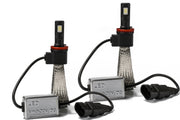


LED Conversion Kits
Converting your headlights to LED means keeping your factory housings and simply swapping the bulbs — no new headlight assemblies, no bodywork, no dealer visit. For the vast majority of vehicles it’s a genuine plug-and-play job you can do in your driveway in about 20 minutes. This page is about getting that conversion right: making sure it fits, installs clean, and performs the way you expect. We’ve guided drivers through it since 2004.
Will my vehicle convert to LED?
If your car uses standard halogen bulbs — and the overwhelming majority do — the answer is almost always yes. The only things to confirm are your bulb sizes (low, high, and fog can differ) and whether your vehicle’s computer needs a CANbus-ready kit to avoid a warning light. Drop your vehicle into the Year/Make/Model finder at the top of the page and we’ll confirm both and hand you the exact conversion kit that fits.
What the install actually looks like
Pop the hood, twist out the old halogen bulb, and seat the LED in the same socket — it locks in the same way. The driver module (the small box on the bulb’s pigtail) tucks behind the housing; there’s usually a dust cap or grommet designed to route it. Clip in the connector and you’re done. A few tips that make the difference between a good result and a great one:
- Don’t touch the LED chips with bare fingers — handle the base.
- Get the orientation right. On reflector housings especially, the LED emitters need to face the same axis the halogen filament did (usually 3 and 9 o’clock) for a correct beam.
- Aim afterward. Check your headlight aim once both sides are in — a two-minute adjustment that keeps light on the road and out of oncoming eyes.
- Do the fogs too if you want a uniform look; they’re often a different size, and the finder covers them.
Getting the performance you paid for
Two factors decide how good the result looks: housing match and cooling. Projector housings focus LED light beautifully; reflectors need the emitter position right. And because heat is what shortens an LED’s life, a kit with a real fan or heatsink holds its brightness where a cheap one fades. Ours are built for both — and backed by a lifetime warranty, free shipping over $75, and a 60-day guarantee.
Frequently asked questions
Is converting to LED difficult to install?
For most vehicles it is genuinely plug-and-play and takes about 20 minutes. You twist out the halogen bulb, seat the LED in the same socket, tuck the small driver behind the housing, and clip in the connector. No wiring or cutting on typical installs.
Do I need to reaim my headlights after an LED conversion?
Yes, it is worth checking. Any bulb change can shift your aim slightly, and correct aim is what keeps your light on the road without glaring at oncoming drivers. It is a quick adjustment and makes a real difference in performance.
Which way should the LED bulb face when I install it?
In reflector housings, the LED emitters should line up on the same axis the halogen filament used, typically the 3 and 9 o'clock positions, so the reflector aims the light correctly. Most kits let you rotate the bulb to set this before locking it in.
Will an LED conversion void my warranty or fit my connectors?
LED conversion kits are designed to use your factory bulb socket and connector, so no splicing is required on typical vehicles. Use the Year/Make/Model finder to confirm the exact plug-and-play kit for your car.
What if my dashboard shows a bulb-out warning after converting?
Some vehicles monitor bulb current and flag the LED's lower draw. A CANbus-ready kit or a plug-in decoder resolves it. Our finder tells you up front whether your vehicle needs one.